


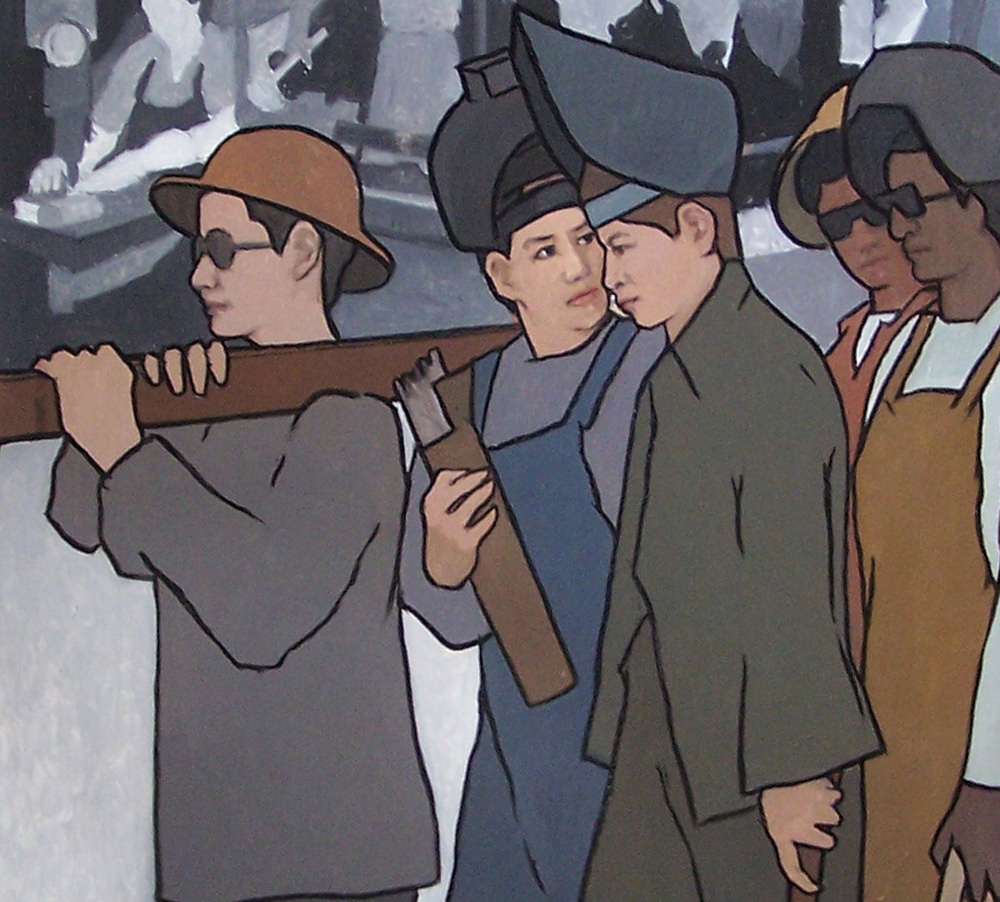
Maine produced nearly a quarter of the United States Navy’s big ships in World War II. Depicted in the panel’s center are female shipyard workers. In Maine they were sometimes called "Wendy the Welder." Women worked in large numbers in Maine’s shipyards; 3,700 worked in in South Portland to build thirty "Ocean" cargo ships for the British government and 236 "Liberty" cargo ships for the U.S. Over 1,600 women worked in In Bath to build eighty destroyers.
As women took on traditionally male jobs, they endured harassment from some of their co-workers, while other male co-workers spoke up on their behalf. Some female workers demanded "equal pay for equal work," since the women had directly replaced men who had gone to war. Labor unions argued that by paying women less money, men’s wages in the same jobs might erode after the war. Once the war ended, calls for equal pay for women lost momentum as returning servicemen sought jobs and industry leaders encouraged women to return to home-based work. While some women happily returned to homemaking, others were reluctant to leave these high paying jobs and the freedoms they afforded.
