


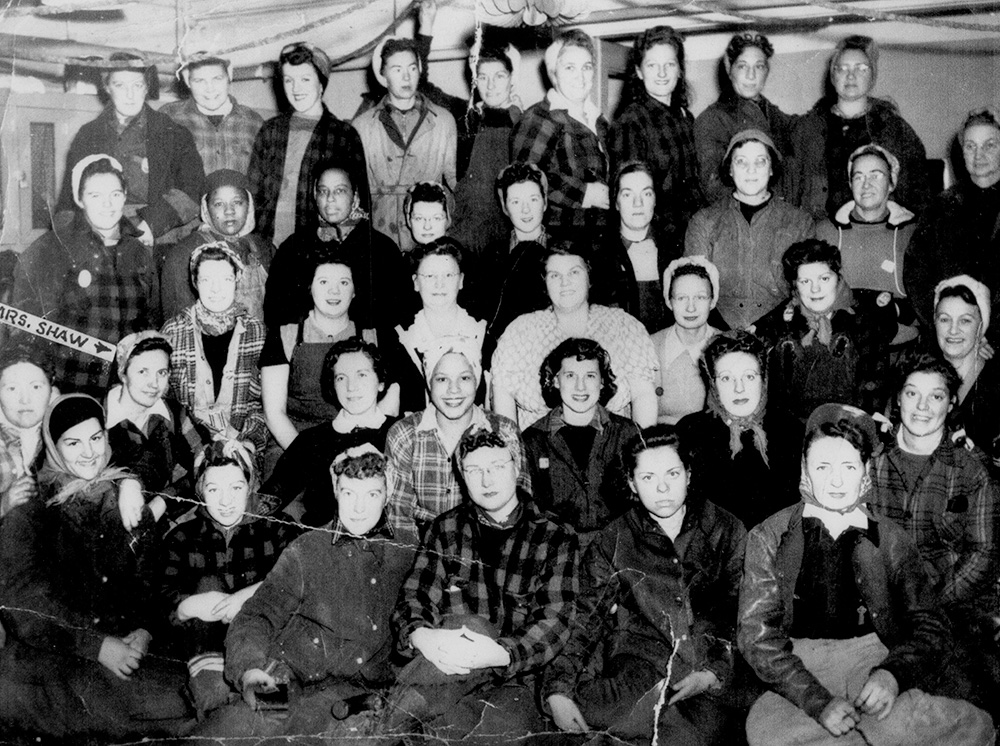
Group of Female Shipbuilders, New England Shipbuilding Corporation, South Portland, 1943. Courtesy of the Maine Maritime Museum.
At the start of World War II, so many men entered the military that war-related industries were hard-pressed to find enough workers. Maine and the nation soon discovered an "industrial reserve army" as thousands of women moved from traditionally female jobs such as secretary, store clerk or textile worker to fill jobs. The federal government’s Selective Service along with industry groups actively recruited women to take jobs that men exclusively held. In 1943, over 22,000 Maine women worked in war-related industries, crafting high-precision airplane parts, radio components, and ammunition. Women also drove hydraulic dump trucks and labored as shipbuilders and machinists. Women in these industrial jobs were hailed around the country as “Rosie the Riveter” and in Maine, “Wendy the Welder.” When the war ended, government, industry, and labor leaders pushed to get women back into the home. While some women happily returned to homemaking, others were reluctant to leave the high-paying jobs and the freedoms they afforded. The large number of women employed in war highlighted challenges to traditional ideas of what women could and should do. More...
