


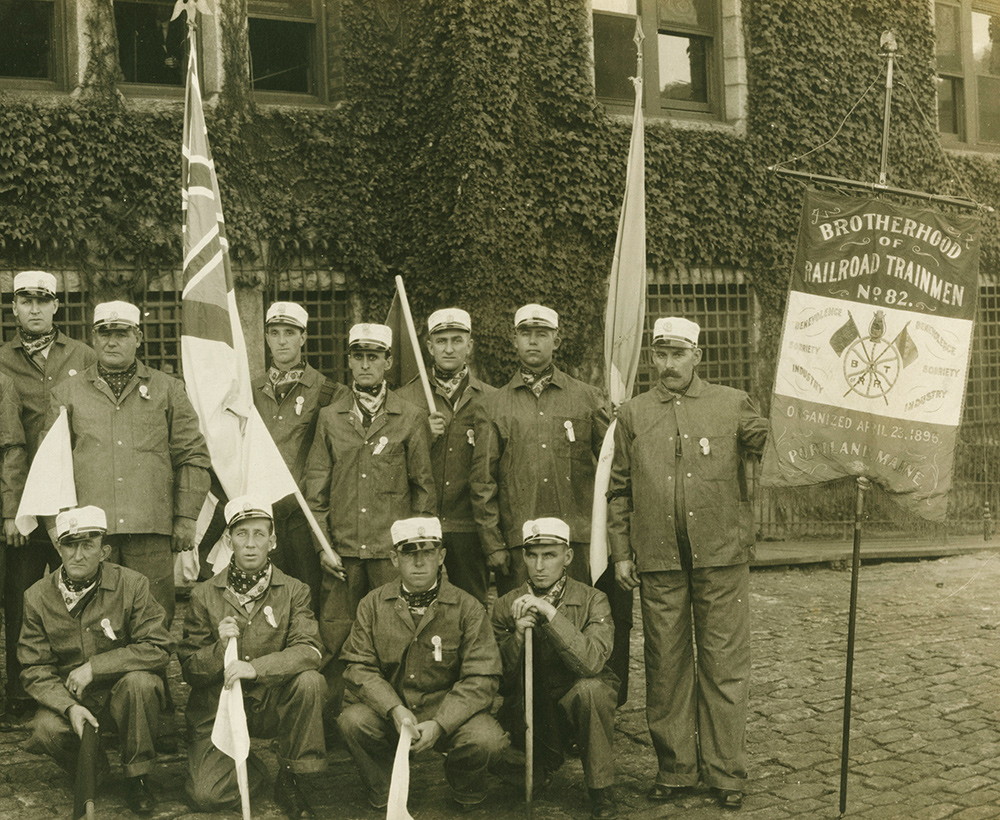
Brotherhood of Railroad Trainmen (detail), photograph by Hanson Studio, Portland, Maine, 1918. Maine State Museum, 2015.7.1.
In the first half of the 1800s, systems of work changed. At first, specialized craftsmen handmade finished products in which they took great pride. As populations grew and transportation took merchandise to ever-wider markets, production accelerated. By the mid-1800s, the pre-industrial artisan system of independent shop owners gave way to dependent factory wage workers who mass-produced goods. This change in production drained workers’ pride in their craft and deteriorated conditions in their workplaces. Labor unions and mechanics' associations formed to support workers through these changes and advocate for improved working conditions.
Highly skilled artisans, known as mechanics, first banded together to elevate their members through education and to foster mutual support in times of sickness or economic distress. The Maine Charitable Mechanic Association began in Portland in 1815. The Bangor Mechanic Association was organized in 1828. Among their organizational activities, these groups paraded the city streets to promote their skills and underscore that their leadership made them important cornerstones in their communities.
In 1882, the Knights of Labor was the first major national union to come to Maine. The Knights sought to uplift humanity through reform. The Knights advocated for the abolition of child labor, an eight-hour work day, equal pay for equal work, and a graduated income tax, in which those with higher incomes paid higher taxes. Despite opposition from business owners, politicians, and the Catholic Church (of which many immigrant workers were members), the Knights of Labor claimed 27,900 Maine workers in 127 local assemblies in 1887. More...
