


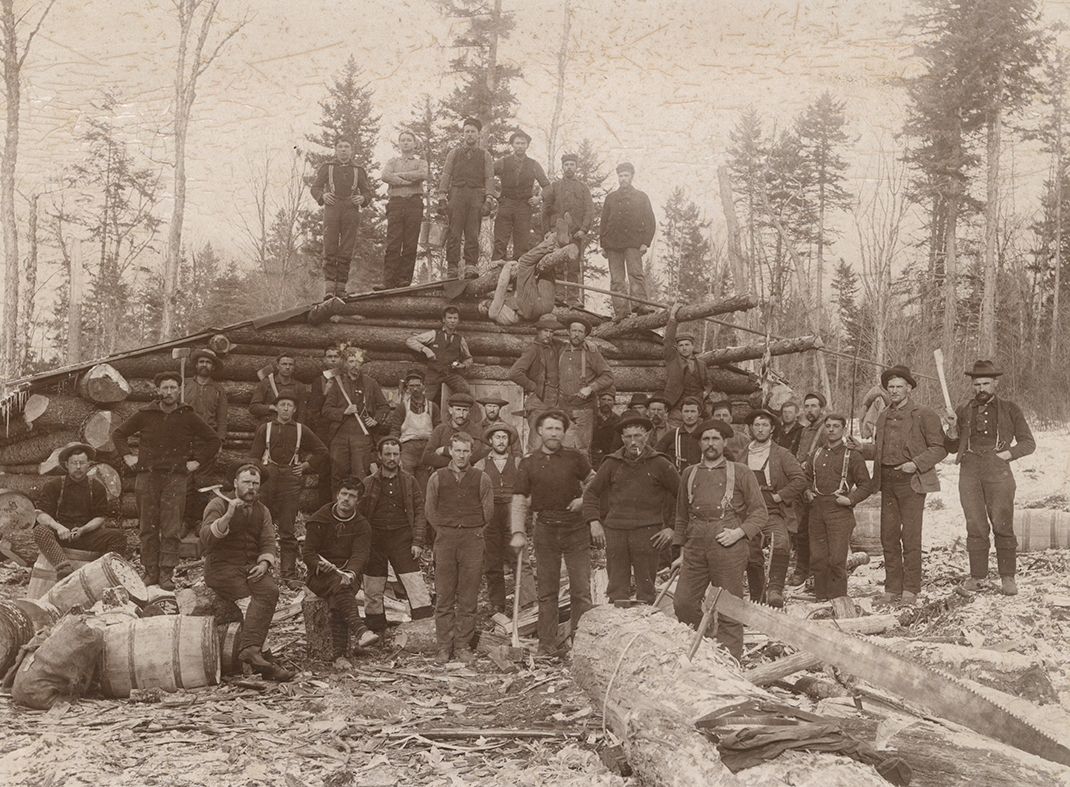
Loggers in the North Maine Woods, photograph by C. P. Braley, Maine, ca. 1890. 2000.18.820.
Maine’s vast forests proved to be the state’s most valuable natural resource and fueled a leading industry. Lumber was necessary for shipbuilding, construction, and making the barrels and boxes in which most merchandise was transported until the 1900s. One key to Maine’s early lumbering success was an expansive and interconnected system of lakes, streams, and rivers rushing to the Atlantic. Floating logs down the rivers to mills and transporting milled lumber by ship was significantly cheaper than transporting wood products overland, giving Maine an economic edge.
After the Civil War, railroads dominated transportation. This drove western expansion, lowered the demand for ships, and increased the cost of shipping lumber from Maine. As the American population center moved west, so did the demand for lumber. Midwestern and Western tree stands drew many experienced Maine loggers seeking better wages and new opportunities. To compete with western markets, Maine’s lumber industry diversified its products. Turning away from board lumber for construction, lumbermen worked for companies formed to process wood to meet growing demands for paper. By the 1890s, much of Maine’s lumber went to pulp and paper mills. Maine reached its peak lumbering years between 1890 and 1910 as crews cut further north into the Maine forest to supply these new mills. More...
