


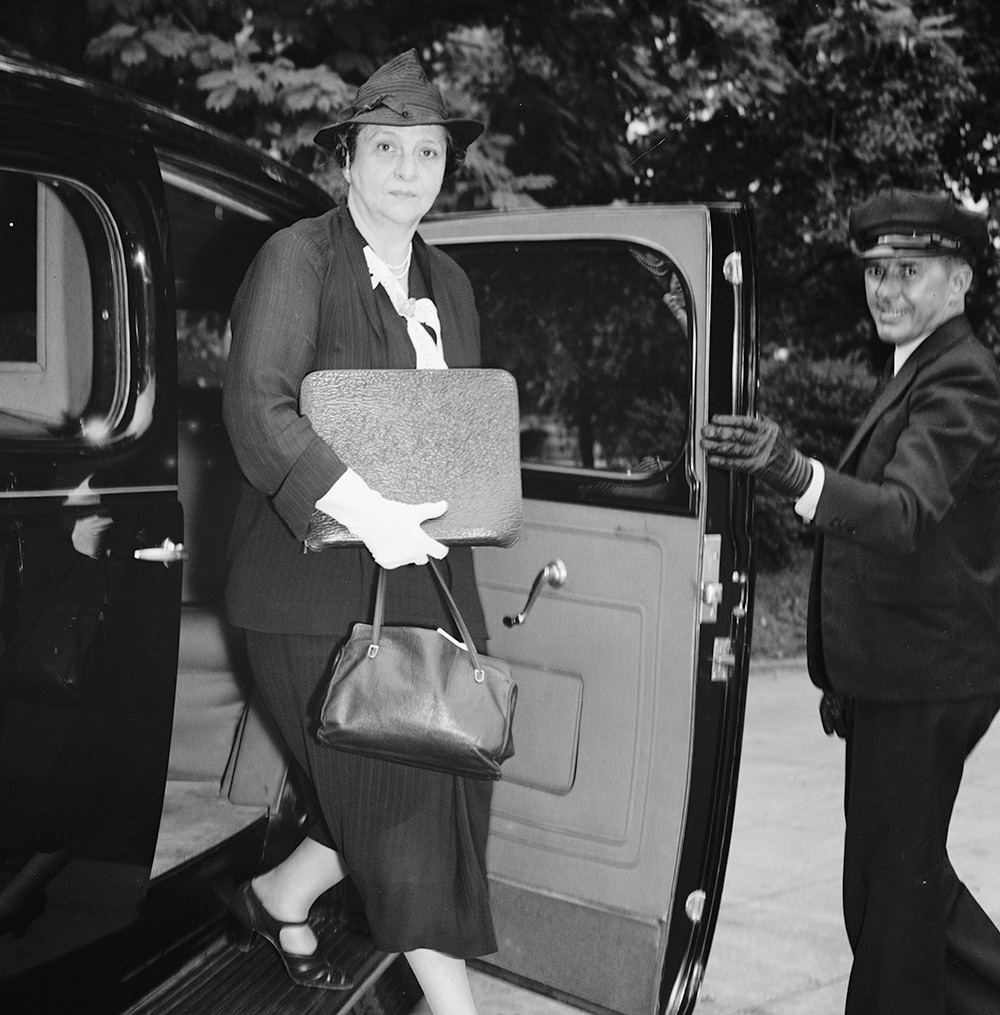
President Calls a Special Meeting [Frances Perkins Arriving], photograph by Harris & Ewing, Washington D. C., September 1938. Courtesy of the Library of Congress.
American reform movements grew out of religious efforts to improve society. Abolition and temperance, the most effective reform campaigns began in the middle 1800s. Abolitionists sought to end slavery, and temperance workers wanted to restrict or eliminate the drinking of liquor in the belief it would curtail domestic abuse and reduce poverty. As conditions worsened in America’s factories after the Civil War, reformers turned to improving the lives of workers. They challenged dangerous working conditions, long hours, child labor, and the low pay that kept families living in squalor.
By 1900, reformers began to professionalize by using new tactics to advocate for reform. University programs in economics, statistics, sociology, and psychology trained experts who believed that by scientifically documenting social problems, they could develop workable solutions. At the same time, investigative reports filled America’s rapidly expanding mass media. Stories in popular magazines described the lives of the less fortunate. These reports alerted middle class readers to the plight of the working classes. Once aware of the situation, many middle class men and women organized groups such as the National Consumer League which demanded that goods be made in factories whose owners maintained high standards of worker safety, reasonable hours, and pay. These groups striving to improve workers’ lives often shared goals with labor unions. More...
