


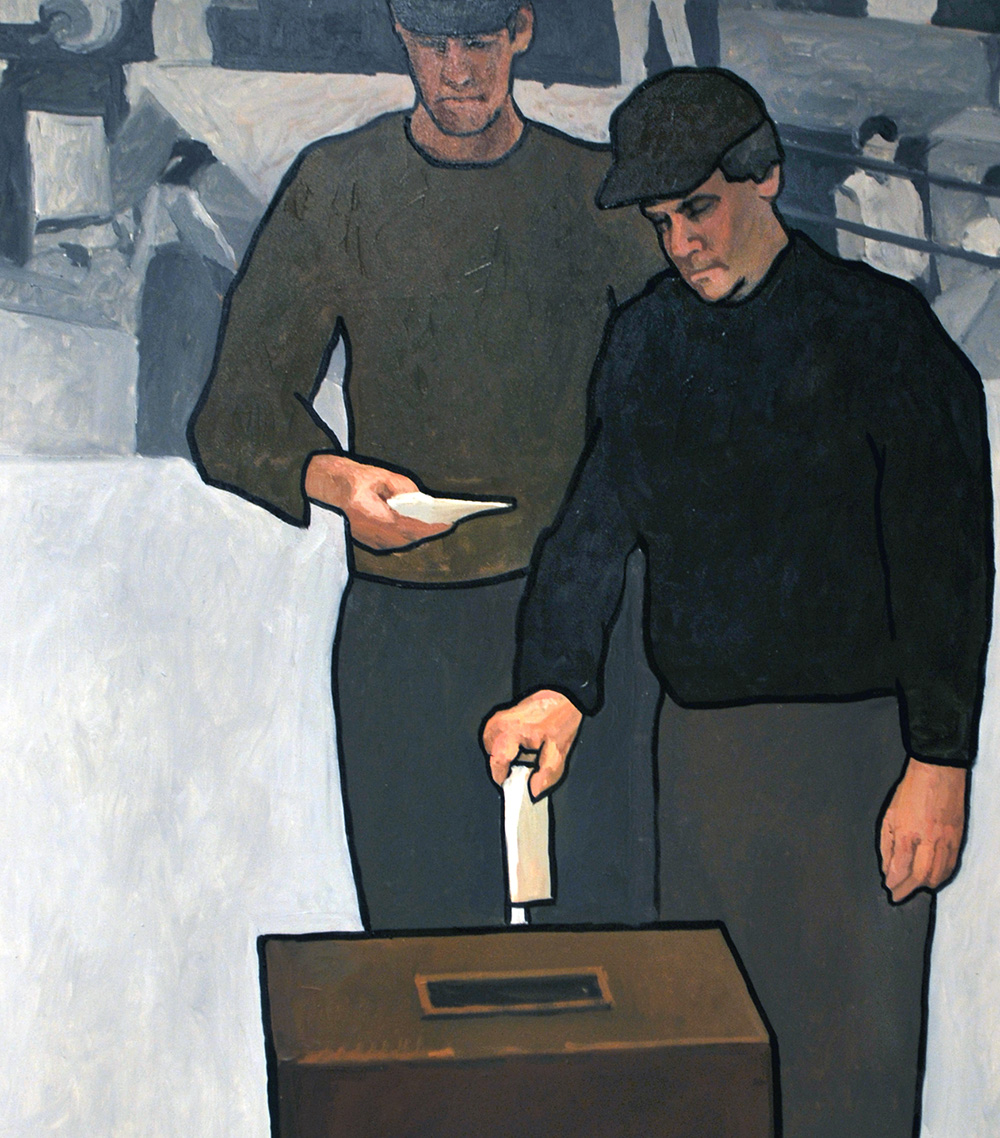
The use of the secret ballot, as illustrated in this panel’s foreground, became law in Maine in 1891. The law established voter privacy in the electoral process. Prior to the secret ballot, voters often endured bullying and intimidation. Political parties sometimes hired thugs called "shoulder-strikers" to push key voters forward, while holding others back. A voter often waded through throngs of rowdy men to submit his ballot.
Employers could fire or legally blacklist workers for any reason, including for political organizing or voting against an owner’s interest. The introduction of the secret ballot enabled workers to meaningfully participate in democratic elections without risking their jobs.
