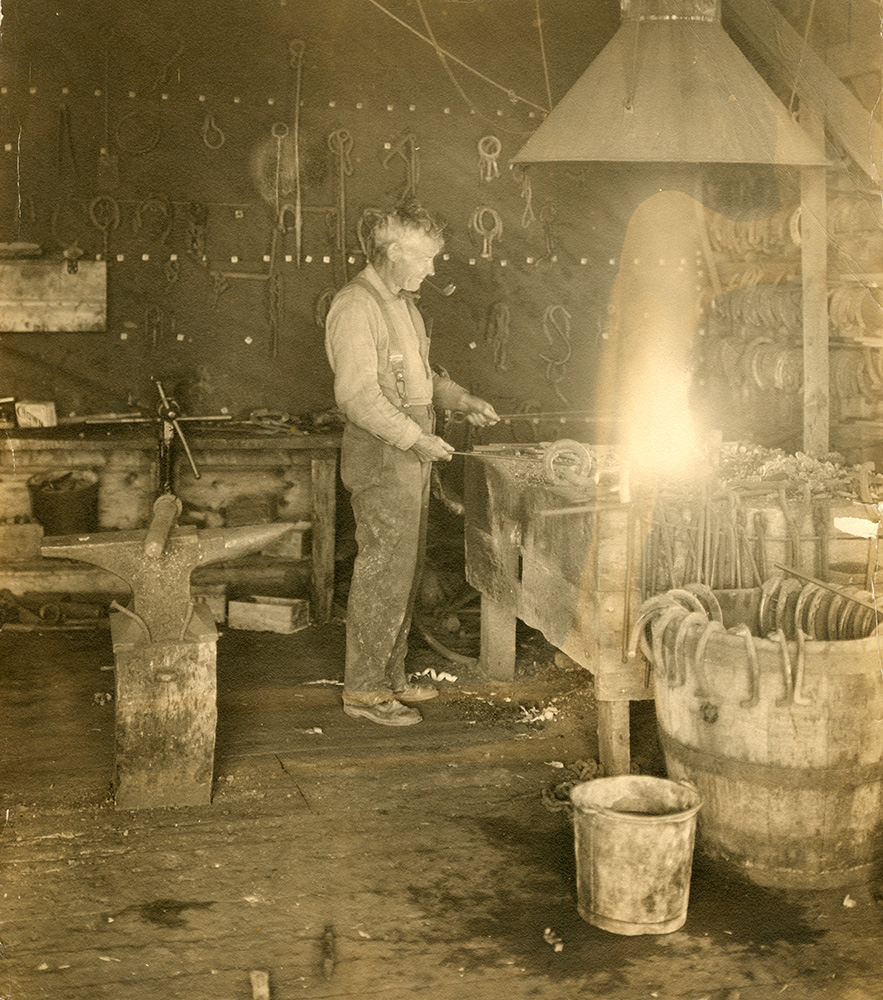
Blacksmith, ca. 1890. Maine State Museum. Gift of Mrs. W. Robinson Brown, 68.187.3.
Blacksmith, ca. 1890. Maine State Museum. Gift of Mrs. W. Robinson Brown, 68.187.3.
Blacksmiths' work changed over time. In early America, blacksmiths hand forged tool blades, nails, hinges and other hardware. In later decades, factories mass-produced such products. As long as travelers and farmers relied on horses, blacksmith shops remained necessary. By the early 1900s, blacksmiths focused on customized metalwork for horses and farm equipment repair.
Blacksmithing and other trades industrialized at different rates. The size of a shop and its reliance on machines to complete tasks depended on the number of potential customers nearby. Shop owners in urban areas first introduced labor-saving machines. These machines forced workers to only focus on parts of final products. In limiting workers to repetitive piecework, laborers lost their connection and pride in creating a hand-crafted product.